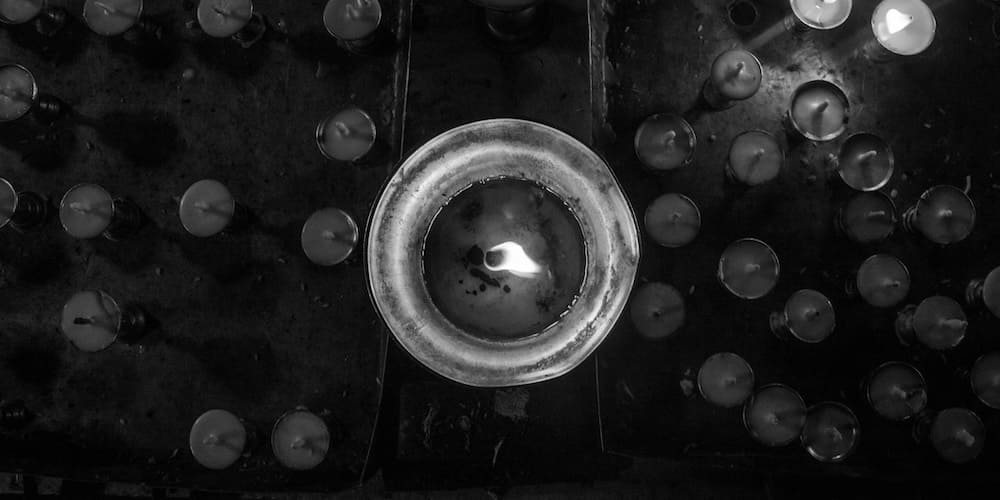
There are few things more ordinary than a ritual.
A cup of tea before sunrise. A walk taken along the same road every evening. A prayer whispered before sleep. A family gathering around the dinner table every Sunday. A grandfather reading the newspaper in the same chair for thirty years.
Most rituals appear insignificant when viewed individually. They are rarely celebrated and almost never considered remarkable. Yet when you look closely at human history, something interesting begins to emerge.
Almost everything that has endured has been built upon ritual.
Religions have rituals. Armies have rituals. Families have rituals. Nations have rituals. Even modern corporations have rituals disguised as culture.
This raises a question worth asking.
Why do human beings repeatedly create rituals across centuries, cultures, geographies and belief systems?
Why does every generation, despite its differences, arrive at the same conclusion?
The answer, I suspect, lies in the nature of life itself.
Life is unpredictable.
We do not know what tomorrow brings. We do not know who will stay and who will leave. We do not know which opportunity will arrive or which difficulty is already on its way. Beneath all our planning and confidence sits a simple reality: we control very little.
Perhaps rituals emerged as humanity’s response to that reality. Not because they make life predictable. But because they make us stable within unpredictability. A ritual is a small act of order performed in the presence of chaos.
It is a quiet declaration that says: “The world may change, but this remains.”
That statement carries more power than it first appears. Every ritual creates continuity. It connects yesterday to today and today to tomorrow. It creates a thread that runs through time, giving the mind something reliable to hold onto when everything else feels uncertain. And continuity is deeply comforting to the human mind.
Perhaps that is why people instinctively reach for rituals during periods of instability.
After a death. During illness. After heartbreak. During war. During grief. During major life transitions.
People begin walking every morning. They start journaling. They pray. They garden. They clean. They sit quietly with a cup of coffee before the rest of the household wakes.
These actions rarely solve the problem itself. But they remind the person that not everything has fallen apart. A ritual creates an island of certainty. And certainty nourishes the mind.
The older I grow, the more I suspect that rituals may serve an even deeper purpose. They may help keep us sane. Not clinically sane. Existentially sane.
The modern human mind was never designed for the volume of information it now encounters daily. Every day we absorb more opinions, more choices, more news, more entertainment, more notifications and more possibilities than previous generations encountered in weeks or months.
We live in an age of abundance. Yet abundance often creates fragmentation. Too many options produce hesitation. Too much information produces confusion. Too much stimulation produces restlessness. The mind begins to scatter. Attention becomes fractured. Identity becomes difficult to maintain. And this is where rituals quietly perform their most important work. They gather the scattered pieces. They create rhythm. They establish boundaries. They remind us that not every moment requires a decision.
A ritual removes negotiation from life. The morning walk happens. The journal gets written. The tea is brewed. The prayer is spoken. The book is opened.
For a brief moment, the mind is relieved from the burden of choosing. And that relief is not weakness. It is restoration.
Perhaps sanity is not merely the absence of mental illness. Perhaps sanity is the ability to maintain coherence in a world determined to fragment us. If that is true, rituals are not luxuries. They are psychological anchors.
There is another reason rituals matter. They reveal character. Not because rituals themselves are virtuous, but because they expose qualities that are otherwise difficult to observe. Anyone can act according to mood. Anyone can perform when inspired. The harder task is showing up when inspiration is absent. A meaningful ritual is a promise made to oneself. And a person who repeatedly keeps promises to themselves demonstrates something valuable: consistency.
This may explain why people with strong rituals often appear more trustworthy. Not because they are morally superior. Not because rituals magically produce virtue. But because rituals create predictability. And trust is often built upon predictability. When someone behaves according to principles rather than moods, we learn that their actions are less likely to fluctuate with circumstance.
The person who writes every morning, exercises every evening, or appears at the same place every week is quietly communicating something important: “You can expect me to remain myself.”
That reliability becomes reassuring. It creates confidence. It creates trust. Not certainty, but trust.
Yet rituals are not inherently good. An addict has rituals. A gambler has rituals. A compulsive person has rituals.
The power lies not in repetition itself, but in what repetition serves. The question is not whether a ritual exists. The question is whether it moves a person toward greater awareness or deeper captivity.
Some rituals expand freedom. Others shrink it. Some rituals create clarity. Others create dependence. The value of a ritual is determined by the life it produces.
Modern culture often mistakes freedom for the absence of structure. Many people imagine freedom as a life without commitments, routines, obligations or repetition. A life where every day is spontaneous and every decision remains open. But when observed closely, the freest individuals often possess the strongest rituals.
At first glance, this seems contradictory. Until one realizes that freedom is not the absence of structure. It is the ability to choose one’s structure. The person without rituals is often governed by circumstance. The person with rituals is often governed by intention.
One reacts. The other directs. One drifts. The other navigates. This distinction becomes increasingly important as life grows more complex. Because complexity punishes the unstructured mind. The more choices available, the more valuable a framework becomes. And rituals are among the oldest frameworks humanity has ever created.
There is also something profoundly spiritual about rituals, even when they have nothing to do with religion. A person who reads every morning is reinforcing an identity. A person who exercises every day is reinforcing an identity. A person who writes, reflects, walks, gardens, creates, prays, or studies is reinforcing an identity. They are repeatedly answering a question that every human being asks, whether consciously or unconsciously: “Who am I?”
The answer is rarely found through thinking. It is found through doing. Repeated doing. Each ritual becomes a vote cast for a particular version of oneself. Over time, these votes accumulate. A personality emerges. A character forms. A life takes shape. This may be why rituals survive technological revolutions. The tools change. The rituals remain.
The world has moved from handwritten letters to smartphones, from horse-drawn carts to autonomous vehicles, from local communities to global networks.
Yet people still gather around dinner tables. They still light candles. They still walk. They still pray. They still read before bed. They still seek repetition amidst change. Perhaps because rituals satisfy a need that technology cannot. Technology provides convenience. Ritual provides meaning. Technology helps us do more. Ritual helps us remain ourselves while doing it. And maybe that is their greatest value. Not productivity. Not efficiency. Not success. Identity.
In a world constantly asking us to accelerate, adapt, optimize, and reinvent ourselves, rituals quietly perform a different function. They help us remain recognizable to ourselves. Or perhaps more accurately, they help us remember who we are trying to become.
The world changes. Seasons change. Technologies change. Societies change. People change. A ritual stands in the middle of that movement and says: “Not everything must.”
And perhaps that is why rituals have survived every civilization that ever existed.
Not because they make life easier. But because they help us remain whole.